
rules
Eaves rules
Canonical Tilehaus procedures for Eaves: equipment, deal, legal plays, and how the hand ends.
The eaves, not a rack
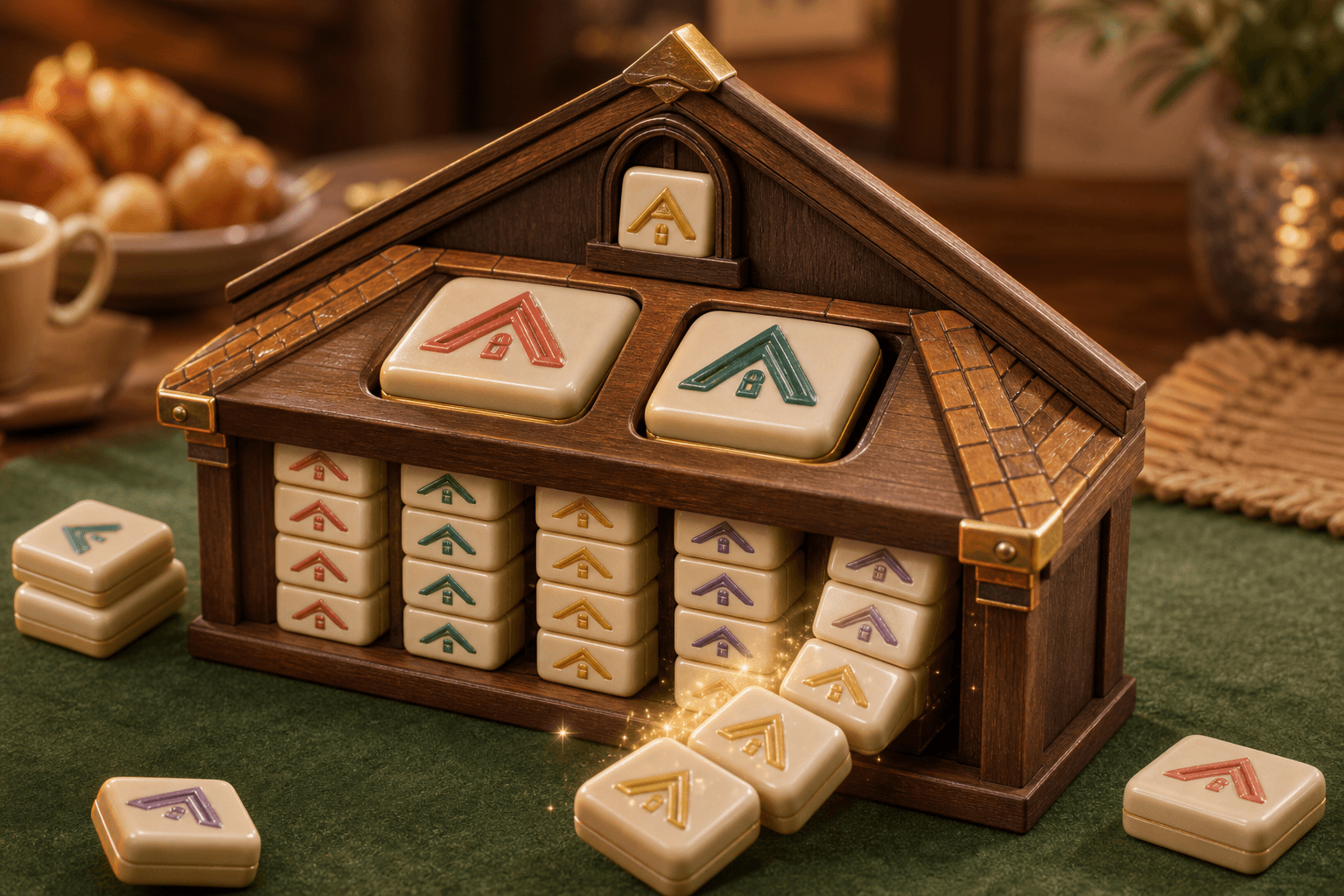
Two tiles are public on the roof. Drag one onto a column with space. The other stays. Then the attic tile steps down onto the eaves. You may instead nudge: drag the top tile of a column onto the neighboring column.
When it ends
If nobody can drop or nudge, leftover wall tiles subtract from every score. Highest score wins. Ties share the win.
Frequently asked questions
Straight answers to what people search — for Google, voice, and assistants.
What is Eaves?
Eaves is a Tilehaus original. Two ivory tiles sit on the roof. You drop one down a column and leave the other. Three or more matching colors in a bunch slide off. You can also nudge a rooftop tile one column over. Leftover wall tiles subtract at the end.
How do you score in Eaves?
The first bunch pays 1 per tile. Cascades pay 2 per tile, then 3. Two bunches in one drop is a fork (+3). Sealing a column without a clear is −2. Tiles still on the wall at the end subtract 1 each.
How many tiles are in Eaves?
Forty tiles: ten each of coral, teal, sunshine, and periwinkle. Two sit on the eaves. The attic shows the next tile in the bag. The wall is six columns, seven high.
What is a nudge in Eaves?
Instead of dropping from the roof, drag the top tile of a column onto the neighboring column. Use it when a bunch is already on the wall and the eaves tiles would mess it up.
Is Eaves the same as match-3 or Qwirkle?
No. Color Cubes scores lines on a flat grid. Eaves is a roof-and-wall game: a public pair, gravity, leftover tax, and a sideways nudge. Tilehaus invented it in 2026.