
rules
Mahjong rules
Canonical Tilehaus procedures for Mahjong: equipment, deal, legal plays, and how the hand ends.
The wall and the deal
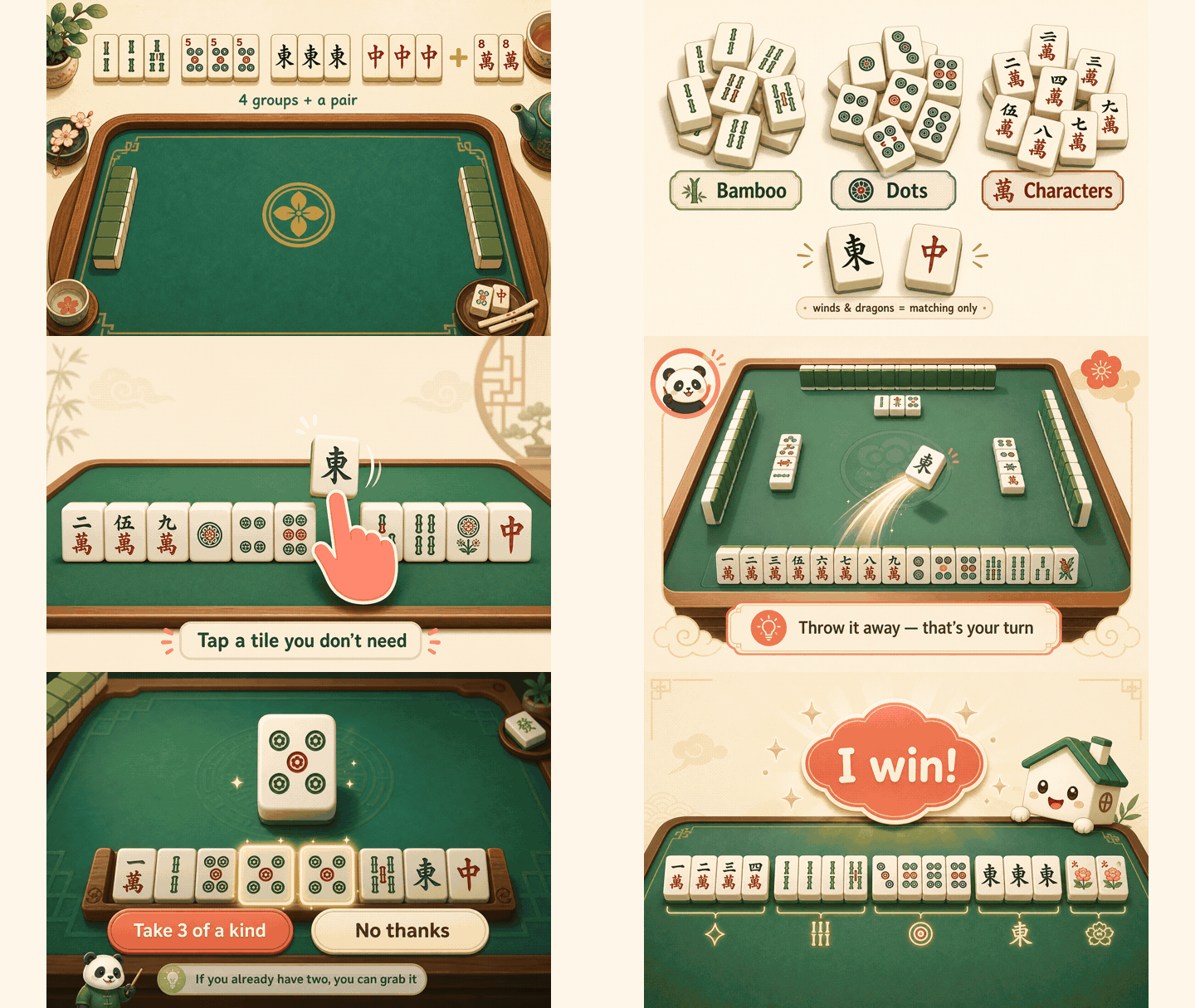
Shuffle the 136-tile set and build a square wall. Each player receives 13 tiles. East (dealer) receives a 14th tile and must discard to open the deal.
Play proceeds counterclockwise in many Chinese tables and clockwise in some teaching sets. Tilehaus follows dealer-left order after each discard is resolved.
Turns
On your turn you either claim the last discard or draw from the wall, then discard one tile unless you declare a win.
Exposed pongs and kongs sit on the table. Concealed tiles stay in your hand. A kong draws a replacement tile from the wall.
Winning
You win by completing four melds and a pair, either by self-draw or by taking a discarded tile (hu).
If the wall empties before anyone wins, the hand is a draw. Tilehaus scores a self-draw win slightly higher than a discard win, matching common teaching tables.
Frequently asked questions
Straight answers to what people search — for Google, voice, and assistants.
How many tiles are in mahjong?
A Chinese playing set without bonus tiles has 136 tiles. Boxed sets sold with flowers and seasons have 144. Tilehaus deals the 136-tile wall: 108 suited tiles, 16 winds, and 12 dragons.
How many players do you need for mahjong?
Four. Classic Chinese and Hong Kong mahjong is a four-seat game. Three-player tables exist as house variants with a shortened wall. Tilehaus fills empty chairs with bots so you can start without three friends.
How do you win in mahjong?
You win (hu) by completing four melds and a pair — 14 tiles. A meld is a pong of three identical tiles, a kong of four, or a chow of three consecutive tiles in one suit. You can win by self-draw or by claiming a discard.
What is a pong, chow, and kong in mahjong?
A pong (pung) is three identical tiles. A kong is four identical tiles and draws a replacement from the wall. A chow is three consecutive ranks in one suit. Only the player to the discarder’s left may chow; anyone may pong, kong, or hu.
Is mahjong hard to learn?
The first hand is the hard part: three suits, winds, and dragons. After you can read tiles, the loop is draw-or-claim, then discard. Scoring charts (faan, han) are a later skill. Tilehaus uses a teaching table so you can finish a hand before you memorize a club chart.
How long does a game of mahjong take?
One hand is often 10–20 minutes. A social set of hands runs 45–90 minutes. Club sessions can last hours. Online with bots, a single teaching hand is closer to 15 minutes.
What is the difference between mahjong and mahjong solitaire?
They only share tile art. Four-player mahjong is a draw-and-discard meld game with a wall. Mahjong solitaire (Shanghai) is a one-player matching puzzle: remove free identical pairs until the layout is clear.
Can you play mahjong with two or three players?
The designed game is four seats. Two- and three-player house rules exist, usually by removing tiles or using dead walls. On Tilehaus you still sit a four-seat table; bots take the empty chairs and only make legal claims.
How many tiles does each player get in mahjong?
Each player is dealt 13 tiles. The dealer (East) starts with 14 and discards first. After that, a hand stays at 13 until you declare hu on a 14th tile.
How does mahjong scoring / faan work?
On the Tilehaus teaching table a win is scored in faan (fan), then paid as 2^faan points (cap 128). Dragon pungs, seat/round wind pungs, self-draw, all pungs, mixed or pure one suit, and all honors are the usual patterns. A chicken hand (0 faan) still pays 1. Club charts differ; this is not an official HKMA schedule.
Can you play mahjong online free?
Yes. Tilehaus runs a free four-player teaching table in the browser — no account required. Bots fill empty seats. Remote friends join with a room code when the friend server is running.