
game
Okey online — rules, facts, and a live table
Okey is the Turkish four-player tile rummy. An indicator tile is flipped; the next rank in that color becomes the okey, a wild. Players draw and discard with 21 tiles (dealer 22) and win by showing seven three-tile melds.
What you are looking at
Okey is the Turkish four-player tile rummy. An indicator tile is flipped; the next rank in that color becomes the okey, a wild. Players draw and discard with 21 tiles (dealer 22) and win by showing seven three-tile melds.
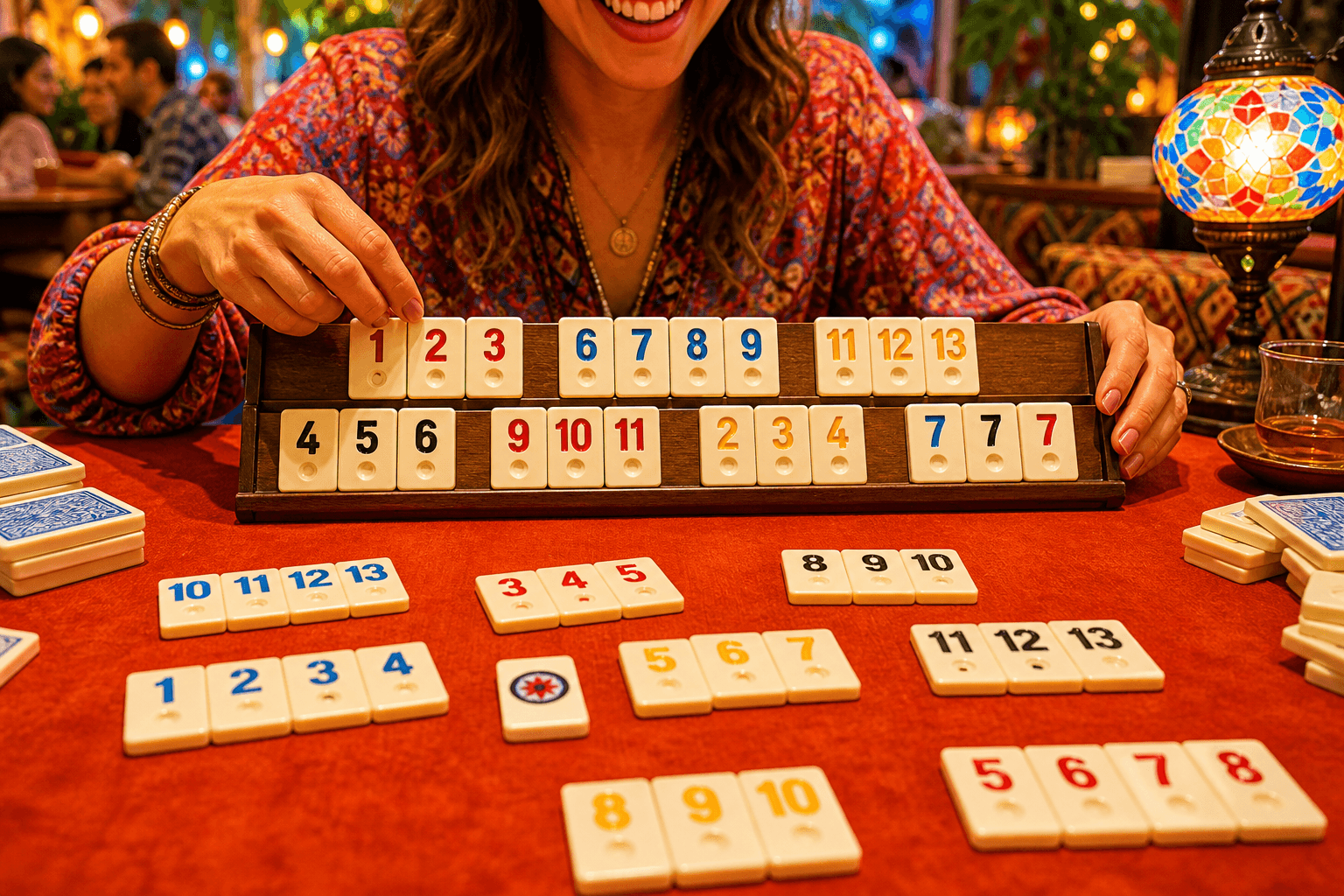
Same chunky number tiles as Tile Rummy, on a red felt Turkish table, with one face-up indicator and a wild determined by the deal—not a printed joker art style.
Origin
Okey It is associated with Turkey. Dating: 20th-century Turkish table game derived from rummy / tile-rummy sets.
Equipment
106 tiles in four colors, 1–13 twice, plus an indicator tile that designates the okey (joker)
Players: 2–4 (classic tables are 4). Typical duration: 20–40 minutes.
Frequently asked questions
Straight answers to what people search — for Google, voice, and assistants.
What is Okey?
Okey is the Turkish four-player tile rummy. It uses the same 106-tile set as Tile Rummy. An indicator tile is flipped; the next rank in that color becomes the okey (wild). Players hold 21 tiles and win by showing seven three-tile melds.
Is Okey the same as Rummikub?
They share 106 tiles and sets-and-runs language. Okey does not let you rearrange a public table. The wild changes every deal from the indicator. Hands are 21 tiles, not 14, and you win by showing seven triples, not by emptying a rack onto a shared board.
What is the okey tile?
After the indicator is flipped, the next rank in that color is wild — the okey. If the indicator is a green 10, green 11s are wild. Printed “false okeys” stand in for those faces. Tilehaus wraps 13 to 1 of the next color.
How many tiles do you get in Okey?
Twenty-one. The dealer starts with 22 and discards first. A winning show is seven valid three-tile sets or runs, using okeys as wilds.
What is Okey 101?
Okey 101 is a related digital scoring game popular in Turkish apps. It is not the same as classic show-seven-melds Okey. Tilehaus implements the classic table, not 101 point scoring.
How do you win at Okey?
Declare a show when your 21 tiles form seven legal three-tile combinations. You draw from the center or take the previous discard, then discard one tile each turn until the rack is a legal show.
Can you play Okey online?
Yes. Tilehaus has a free classic Okey table in the browser for 2–4 seats, with bots filling empty chairs. This is the seven-meld show, labeled separately from Tile Rummy.
How long does an Okey hand take?
A classic four-player hand is often 20–40 minutes. Online teaching hands with bots run shorter once you can read the indicator.